

About Simon Imuwika
Simon Imuwika writes speculative fiction shaped by systems thinking and historical awareness, with a particular interest in procedural authority, contested records, and the human cost of decisions made in offices, archives, and planning rooms. Rather than imagining explosive futures, his work explores quieter escalations and the tension between public stability and private truth, where conflict is rarely dramatic but often structural.
His novels often begin at the point where systems appear to function as intended, yet quietly produce distortion, omission, or harm. Power rarely arrives in obvious form. It works through policy, documentation, delay, and the quiet enforcement of what is considered official. Within these environments, his characters are not simply oppressed or rebellious. They are entangled, forced to navigate, uphold, and sometimes unknowingly reinforce the very structures that constrain them.
Across his work, memory is unstable, authority is procedural, and resolution is never clean. What is buried is rarely gone, and what is recorded is rarely neutral. The result is fiction built less on spectacle than on pressure, gradual, persistent, and difficult to escape.
Simon Imuwika writes speculative fiction shaped by systems thinking and historical awareness, with a particular interest in procedural authority, contested records, and the human cost of decisions made in offices, archives, and planning rooms. Rather than imagining explosive futures, his work explores quieter escalations and the tension between public stability and private truth, where conflict is rarely dramatic but often structural.
His novels often begin at the point where systems appear to function as intended, yet quietly produce distortion, omission, or harm. Power rarely arrives in obvious form. It works through policy, documentation, delay, and the quiet enforcement of what is considered official. Within these environments, his characters are not simply oppressed or rebellious. They are entangled, forced to navigate, uphold, and sometimes unknowingly reinforce the very structures that constrain them.
Across his work, memory is unstable, authority is procedural, and resolution is never clean. What is buried is rarely gone, and what is recorded is rarely neutral. The result is fiction built less on spectacle than on pressure, gradual, persistent, and difficult to escape.
My Story
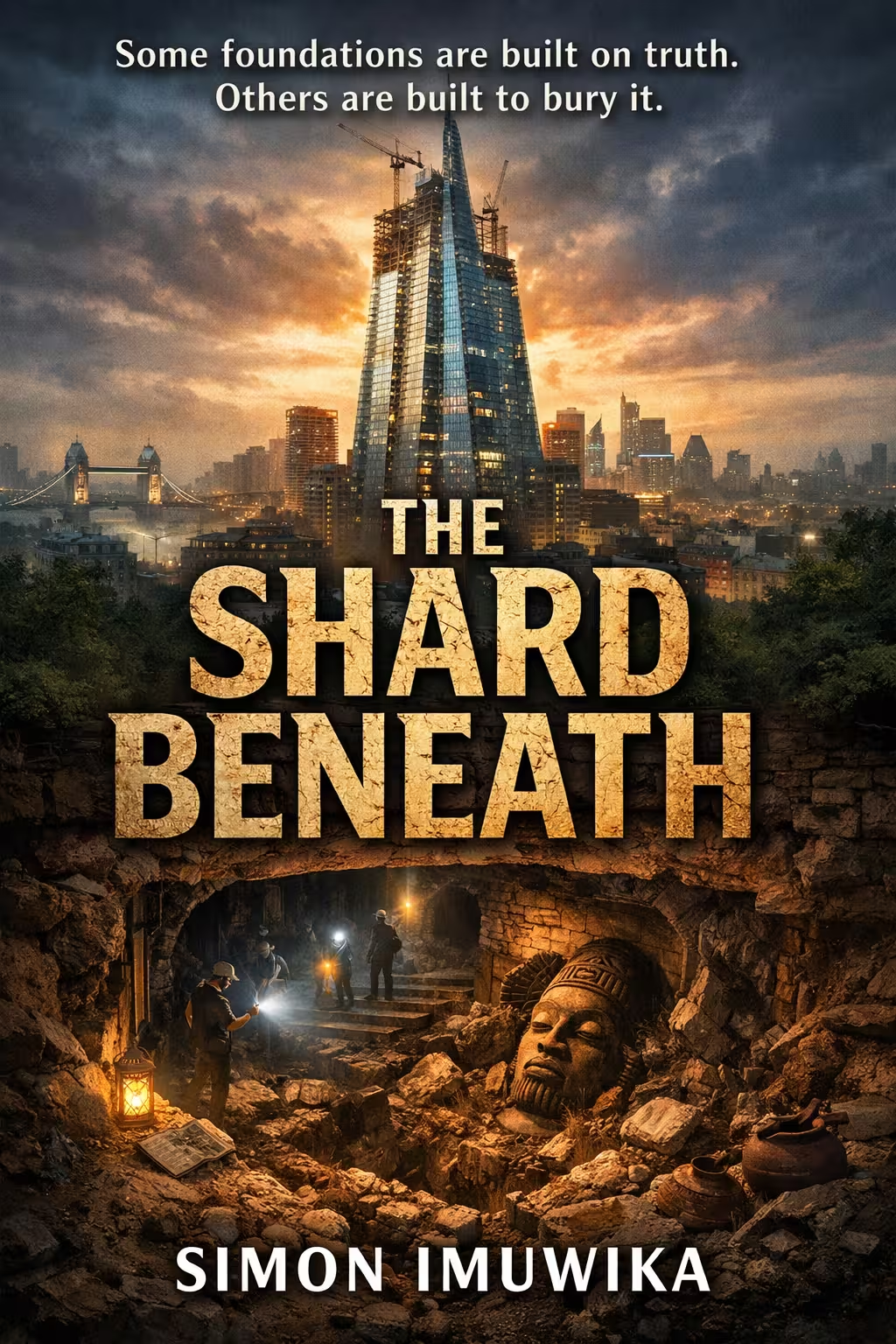
My fiction begins with the sense that beneath ordinary life something larger is always waiting, whether that’s fear, memory, inheritance, or the quiet pressure of what people can’t bring themselves to say. In The Day We All Stopped, that presence gathers inside a family and turns the familiar strange. In The Shard Beneath, it rises through the city itself, through land, history, and the buried record beneath modern ambition.
I’m drawn to characters who seem composed on the surface while carrying forces they don’t fully understand, and to worlds where silence is never empty. At the heart of my work is the belief that what’s hidden often shapes human lives more powerfully than what’s openly seen, and that the past rarely disappears simply because someone has decided not to name it.