

Speculative Fiction About Systems, Memory, and Quiet Rupture
Simon Imuwika writes speculative fiction that examines what institutions protect, what they bury, and what resurfaces despite careful administration. His novels explore how authority operates through procedure, how history is edited through structure rather than force, and how private experience collides with public order in moments of quiet fracture.
The tension is structural, the threat often subtle, and the consequences enduring.
Featured Novel
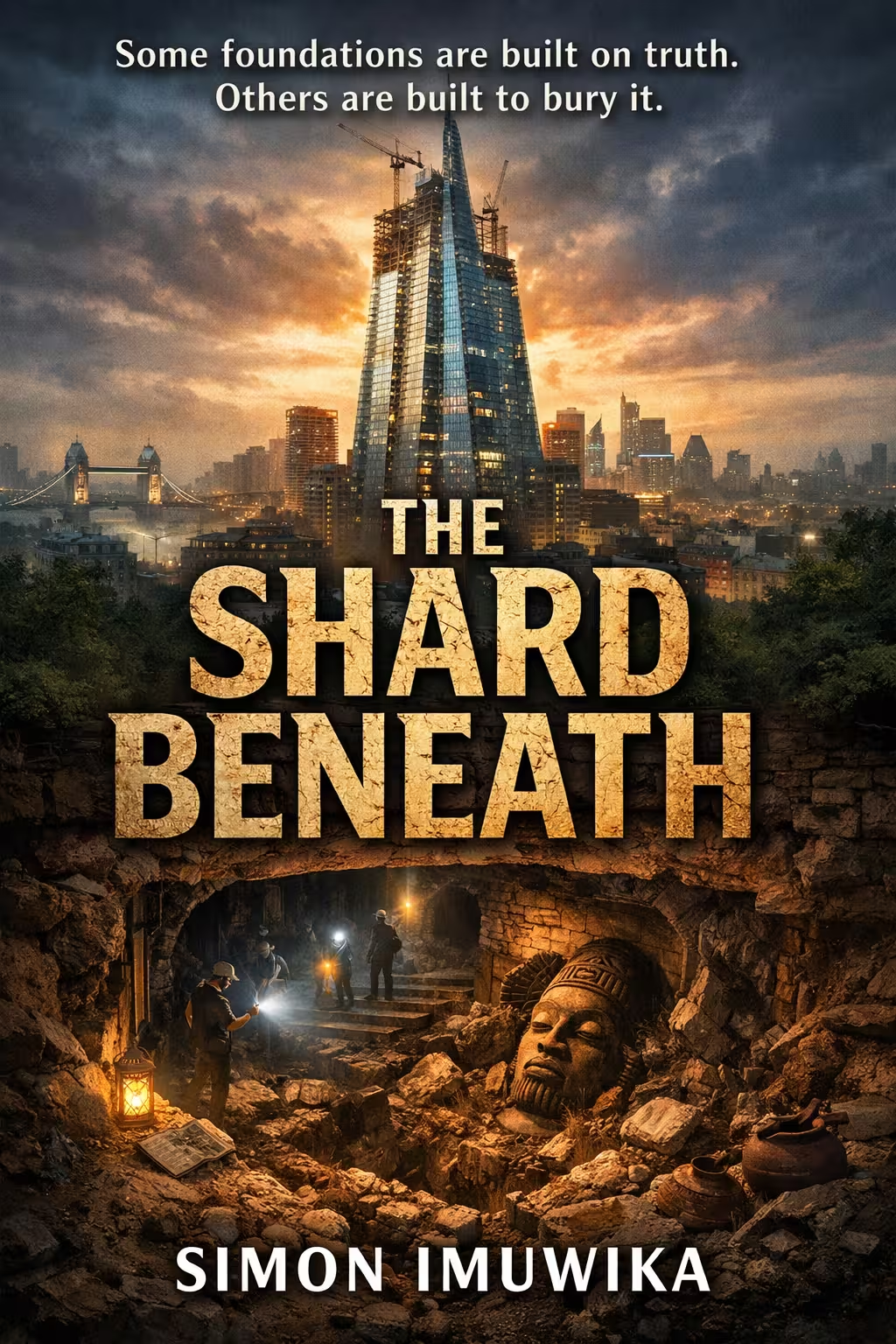
THE SHARD BENEATH
A rising London tower. A suspicious fire. A buried history that refuses to stay buried. The Shard Beneath follows architect Oba Ajayi as a flagship development becomes entangled with a missing fragment, a contested legacy, and a chain of power stretching from London to Lagos.
What begins as a modern struggle over design, planning, and investment opens into something older and more charged: a story about memory, ownership, erased names, and what lies under the smooth surface of progress. As Oba is pulled deeper into a web of syndicates, sabotage, public hearings, and ancestral truth, he must decide whether he is simply building another landmark or uncovering an obligation the city has spent decades trying not to hear.
Rich in atmosphere and driven by tension, this is a literary political thriller about architecture, inheritance, and the price of building over the past.


THE DAY WE ALL STOPPED
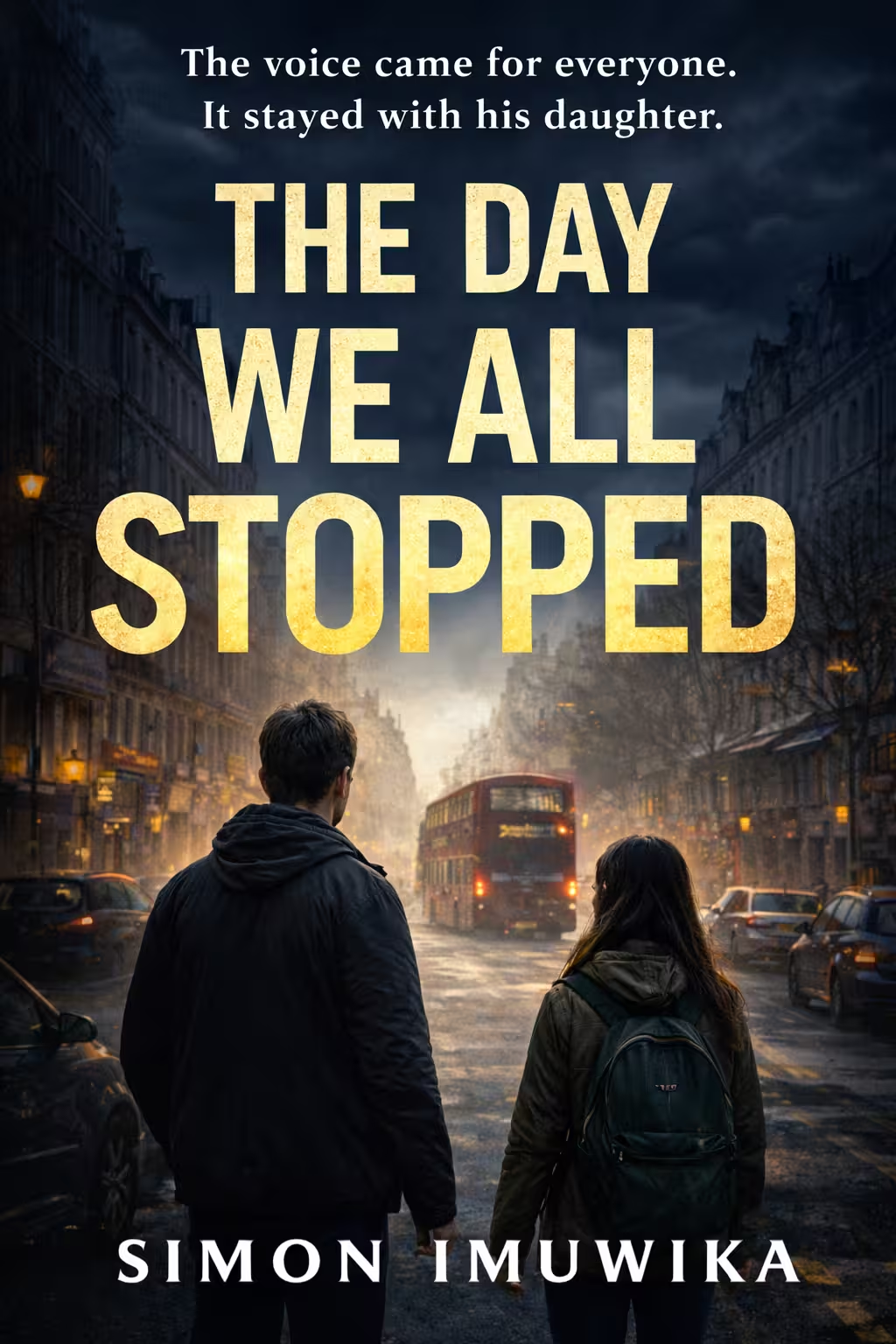
When a voice speaks into people’s minds at exactly 08:12, ordinary life in South East London begins to crack. For Daniel Kirkbank, a weary teacher and father, the message is personal: Do not let her walk home alone. As the city fills with rumour, fear, and second messages that seem to know exactly where to strike, he is drawn into a battle that is as intimate as it is unsettling.
At its heart is his daughter Emma, who is hearing something darker and more divisive than anyone around her can quite admit. The novel begins with a childhood brush with the uncanny and unfolds into a tense, emotionally charged story about fear, trust, and the danger of leaving the wrong thing unfinished.
It’s a psychological supernatural novel about a city under pressure, a family under strain, and the quiet courage needed to face what will not leave by itself.
THE DAY WE ALL STOPPED
When a voice speaks into people’s minds at exactly 08:12, ordinary life in South East London begins to crack. For Daniel Kirkbank, a weary teacher and father, the message is personal: Do not let her walk home alone. As the city fills with rumour, fear, and second messages that seem to know exactly where to strike, he is drawn into a battle that is as intimate as it is unsettling.
At its heart is his daughter Emma, who is hearing something darker and more divisive than anyone around her can quite admit. The novel begins with a childhood brush with the uncanny and unfolds into a tense, emotionally charged story about fear, trust, and the danger of leaving the wrong thing unfinished.
It’s a psychological supernatural novel about a city under pressure, a family under strain, and the quiet courage needed to face what will not leave by itself.
Themes
These novels explore institutional memory and erasure, administrative power, intergenerational inheritance, psychological rupture within ordinary life, governance under stress, and the quiet mechanics through which control becomes normalised.
They are not dystopian spectacles but examinations of systems placed under pressure.
Begin Reading
Start with The Shard Beneath for a story of architecture, legacy, and buried ownership, or begin with The Day We All Stopped for a psychological and societal reckoning triggered by a shared interruption that no institution can fully explain.
Each stands alone, yet together they question who controls narrative, memory, and consequence.
About Simon Imuwika
Simon Imuwika writes speculative fiction shaped by systems thinking and historical awareness, focusing on procedural authority, contested records, and the human cost of decisions made in offices, archives, and planning rooms. Rather than explosive futures, his work examines subtle escalations and the tension between public stability and private truth, where conflict is rarely loud but often structural.